
Updated November 2026
An ice maker that quits is annoying. A freezer that quits with a quarter of a deer or a summer's worth of frozen peaches inside is expensive. This page helps homeowners in Phoenixville, PA sort out which problem they have, which easy fixes to try first, and when a broken ice maker or freezer needs a technician.
This site connects homeowners with local independent technicians who handle ice maker repair and freezer repair. Use the form to request a callback, and a technician will call you back to talk through the problem.
If the freezer has stopped cooling: keep the door shut. USDA guidance is that a full freezer keeps food frozen for about 48 hours with the door closed, and a half full one for about 24 hours. Move the most valuable food to a cooler or a neighbor's freezer if the repair will take longer.
Easy fixes for common ice maker problems
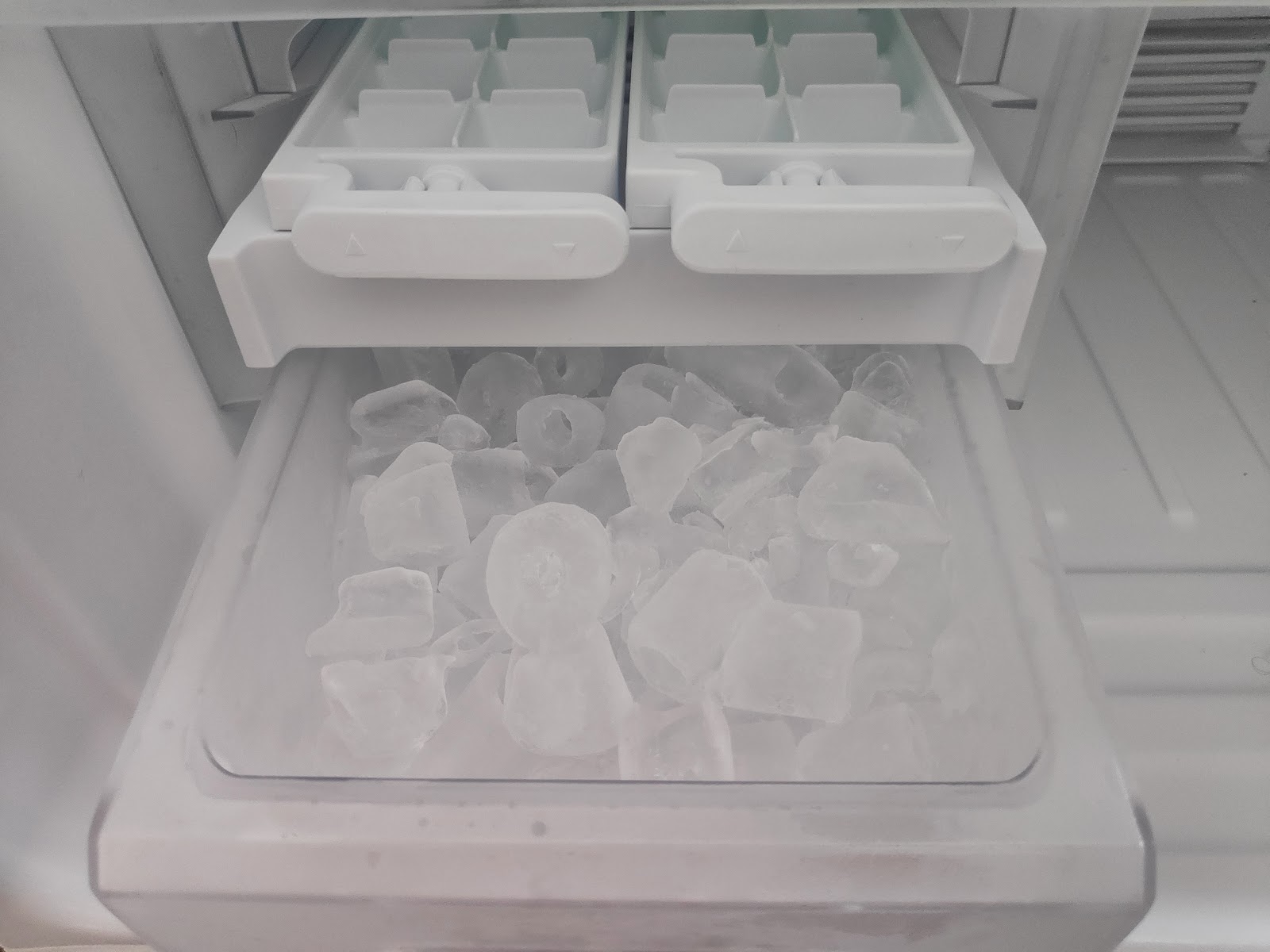
Most refrigerator ice makers work the same way. The water inlet valve opens, water runs up the water supply line and through the fill tube into the ice mold, the water freezes, and the ejector arm pushes the ice cubes into the ice bin. When ice production stops, one of those steps has failed. Work through these in order:
- Is it switched on? Most ice makers have a wire arm or a power button. If the arm is up, or the switch is off, it will not produce ice.
- Is the freezer temperature low enough? Ice makers need the freezer at about 0°F to 5°F. If the freezer is warmer, fix that first.
- Is water reaching it? Check that the shutoff valve behind the fridge is open and the water line is not kinked behind the unit.
- Is the fill tube frozen? If you see ice in the fill tube where it enters the ice maker, that is the blockage. Thaw it with a hair dryer on low or a cloth soaked in warm water.
- Is ice stuck in the ice mold? A cube jammed in the ice maker tray stops the ejector arm. Clear it gently with a plastic utensil.
- When did you last change the water filter? A clogged water filter restricts water flow and starves the ice maker. Most manufacturers say every six months.
Many ice makers also have a reset or test button; the owner's manual shows where it is and how long to hold it.
Small cubes, overfilling and other frequent issues
Smaller cubes or hollow cubes. The ice maker is getting only a small amount of water. A clogged filter, low water pressure or a weak water valve are the common causes. Mineral scale can also clog the screen inside the inlet valve.
Ice maker overfilling. Water spilling over the mold, or a solid sheet of ice in the bin, usually points to a malfunctioning water inlet valve that does not close fully, or to a control board or ice maker module that runs the fill too long.
Ice bin frozen solid or dispenser jammed. Cubes that melt and refreeze into a block jam the auger. Empty the bin, break up the clump, and see if it happens again. Warm air from a door that does not close or a worn door seal is a common cause. Many Samsung French door refrigerators keep the ice maker in the refrigerator door, and some of those models are known for ice buildup that jams the bucket or the auger. Technicians who repair Samsung see this often.
Not making ice but the water dispenser works. This is common on LG and Whirlpool refrigerators. Water reaching the door means the supply line is fine, so a frozen fill tube, a faulty water inlet valve on the ice side, or a failed ice maker assembly is more likely.
Ice tastes or smells bad. Replace the water filter, throw out the old ice, and clean the bin with warm water and a little baking soda.
When to call a professional for complex fixes
If the water is flowing, the freezer is cold and there is still no ice, the part has usually failed. A defective water inlet valve, a broken ice maker assembly or module, a malfunctioning thermostat, or a control board fault are all jobs for appliance repair services. Loud noises such as grinding or buzzing from the ice maker, or water leaking from the supply line, are also good reasons to stop and get help. A technician can test the valve and the module so you only pay to replace the part that failed.
Freezer repair: frost, warm freezers and garage freezers
Frost building up. Heavy frost in a frost free freezer means the defrost system has failed: the heater, the defrost thermostat or the timer or control. Frost near the door means the door seal is not sealing; close the door on a dollar bill and see if it pulls out easily.
Freezer not cold enough. Check that the vents inside are not blocked by packages, the condenser coils are not caked with dust, and the door closes fully. If those are fine, the evaporator fan, a defrost part or the sealed system may be at fault.
Running constantly or making noise. A freezer that never stops running is often fighting dirty coils, a bad seal or a frosted evaporator, which also hurts energy efficiency. Clicking, buzzing or grinding usually points to a fan motor or the compressor start relay.
Chest and upright freezers in a garage. Garage freezers are common in Phoenixville, and Pennsylvania winters are hard on them. Many freezers are only rated to run in rooms above about 40°F to 50°F. In a cold garage the compressor oil thickens and the freezer may stop cycling properly. If your garage freezer only acts up in a cold snap, check the owner's manual for its temperature range before paying for a repair.
Preventative maintenance for ice makers and freezers
- Change the water filter on schedule, usually every six months.
- Empty and wash the ice bin every few months, and throw out old ice.
- Vacuum the condenser coils once or twice a year.
- Keep the freezer temperature at about 0°F and check that the door seal is clean and soft.
- Before you request a technician, check the power source and breaker, and note the brand, model number and any error code.
A little maintenance saves money and keeps the convenience of ice on tap part of daily life.
What ice maker and freezer repair costs
These are national figures, not quotes from Phoenixville technicians. Housecall Pro puts the average appliance repair at about $178, with most jobs between $107 and $249. HomeGuide puts a typical service call at $70 to $130. Replacing an ice maker assembly, water inlet valve or defrost component typically falls in a national range of about $150 to $350 including the service call. Sealed system work on a freezer, like a compressor or refrigerant leak, costs much more and requires a technician with EPA Section 608 certification. Local prices vary, so ask for the service call fee when you book. See appliance repair costs, the repair or replace guide, and refrigerator repair if the fresh food side is warm too.
Common questions
Why is my ice maker not making ice when the freezer is cold?
Usually a closed or kinked water line, a frozen fill tube, a clogged water filter, or a failed water inlet valve or ice maker assembly.
How do I know if the water line to my ice maker is clogged?
If the water dispenser is slow or the ice maker makes small cubes, the line or filter may be restricted. Check for kinks behind the refrigerator, replace the filter, and look for ice in the fill tube.
Where is the reset button on my ice maker?
On many models it is a small button on the ice maker housing, sometimes under the front cover. Others reset with the power button or by switching the ice maker off and on. The owner's manual shows how for your model.
Why does my garage freezer stop working in winter?
Many freezers are only rated for rooms above about 40°F to 50°F. In a cold garage the compressor may not cycle properly. Check the manual for the rated temperature range.
How much does it cost to fix a freezer?
Nationally, replacing a defrost part, fan or inlet valve typically runs about $150 to $350 including the service call. Compressor or refrigerant work costs much more. Ask local technicians for their own quote.